
Is memrise language learning actually worth your time, or is it just another app that teaches you a few words and then leaves you unable to hold a real conversation?
Memrise language learning is worth trying if your main problem is vocabulary and listening. It is an app for iPhone, Android and the web that teaches words and phrases through short videos of native speakers, spaced review and pronunciation practice, plus MemBot, an AI partner for conversation practice. It is strongest for understanding real people and remembering words, and weakest for deep grammar.
This review covers how Memrise works, what Pro costs, which languages it covers, and where it falls short.
What is Memrise and how does it work?
Memrise is a language-learning app from London, founded in 2010, available on iPhone, Android and the web. Its central idea is simple: you learn faster when you hear a language from real people.
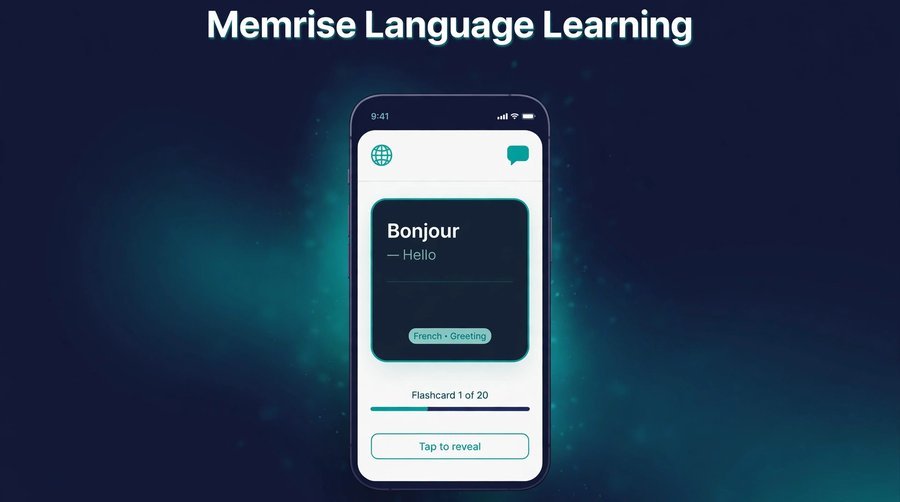
Instead of long grammar rules, Memrise starts with useful words and phrases. You watch short clips of native speakers saying them naturally, repeat them, and test yourself until they stick. The app then brings the same words back at spaced intervals, known as spaced review, so you revise a word just before you are likely to forget it. Pronunciation practice lets you compare yourself with a native speaker. No app alone will make you fluent, but regular listening and speaking practice is exactly what many learners miss.
What makes Memrise different from other language apps?
The main difference is the video. Many apps teach vocabulary with text, pictures and a single recorded voice. Memrise puts real people in front of you, speaking at a natural speed, with different accents and styles. That matters because lesson Spanish is not always the Spanish you hear in a shop in Madrid or Mexico City.
Memrise lists 70,000+ native-speaker videos in its store listing, a figure that reflects the size of its video library. Hearing many different speakers helps your ear adjust to real speech, including hesitations and local expressions that textbooks often leave out. Its focus is vocabulary, listening and everyday phrases first, with heavier grammar left to other resources.
What languages can you learn on Memrise?
Memrise offers official courses in 20+ languages, including Spanish, French, German, Japanese, Korean, Chinese, Portuguese, Italian, Russian, Arabic and Turkish. Those are the languages with full structured courses, video content and guided lessons.
The catalogue counts 149 languages in total including community lists. That larger number includes community-created word lists, so it should not be read as 149 official courses. Spanish, French and German have the deepest coverage. For a less common language, check the app first to see whether it has an official course or only a community list.
Is Memrise free?
Yes, Memrise has a free plan. It costs $0 and gives you limited vocabulary lessons, videos and conversations, one speaking session a day, and ads. It is enough to test whether you like the video style and spaced review, but you will probably hit its limits fairly quickly, especially the one-speaking-session-a-day cap.
Pro removes the ads, unlocks the full library, and gives you unlimited conversations and speaking practice.
Memrise Free vs Pro
| Feature | Free | Pro |
|---|---|---|
| Price | $0 | $24.99 per month, $61.99 per year, or $329.99 lifetime (list price) |
| Vocabulary lessons | Limited | Full access |
| Native-speaker videos | Limited | Full access |
| Speaking sessions | One a day | Unlimited |
| MemBot AI conversations | Limited | Full access |
| Ads | Yes | No |
Those Pro prices are the US App Store list prices checked in October to November 2026. Promotional lifetime offers as low as about $99 to $165 have been seen, but do not treat a promotional price as the standard price. Prices vary by region, platform and promotion — check the checkout before you pay.
How good is MemBot for speaking practice?
MemBot is Memrise’s AI conversation partner, and it is one of the main reasons to consider Pro. It lets you practise a conversation without the pressure of speaking to a real person, which is a real barrier for many learners.
You choose a topic, such as ordering food or asking for directions, and MemBot responds in the language you are learning. It corrects mistakes and suggests more natural phrases, which helps you reply in real time rather than translating every sentence in your head. It is useful, but it is not a replacement for speaking to a real person. Use it to build confidence, then test that confidence with a real speaker or tutor.
Is Memrise good for beginners?
Yes, Memrise is a good choice for beginners, especially if you are starting from zero. The early lessons teach the words you need first, such as greetings, numbers, food and directions, and repeat them often.
The video clips help beginners in a way that text alone cannot. You hear the rhythm of a sentence and learn the phrase as a whole instead of as separate words. Beginners should still pair Memrise with another resource for grammar.
What are the downsides of Memrise?
The honest weak point is grammar. Grammar coverage is weak compared with some rivals, and Memrise does not explain verb conjugations or sentence structure in the depth that a dedicated grammar course would. If you want to know why a sentence works, not just how to say it, you will need to look elsewhere.
The free plan also feels limited once you get into a routine. One speaking session a day, limited lessons and ads can interrupt your flow. Community content varies too: official courses are consistent, while community lists can be uneven, so use them only as extra practice.
How does Memrise compare with other language apps?
Memrise is strongest for vocabulary and listening to real speakers, while other apps are stronger elsewhere. Duolingo is better for a game-like daily habit and basic grammar. Babbel is stronger for structured grammar, Busuu adds feedback from native speakers, and a tutor is still best for deep grammar.
The best choice depends on your weak point. If you know the grammar but cannot understand native speakers, Memrise will help more than another grammar app. If you can understand a lot but cannot build a correct sentence, a grammar-focused app will help more. Many learners use two apps together: Memrise for words and listening, and another for grammar.
If you are weighing several options, our guide to the best free language learning apps compares the leading free choices side by side. Before you pay for any app, try the free version for a week and see which one you actually open every day.
Who should use Memrise?
Memrise is a good fit if you want to build vocabulary quickly, improve your listening, and get comfortable speaking through AI conversation practice. It suits travellers who need useful phrases fast, beginners who want a friendly start, and intermediate learners who struggle to follow real speech.
It is a weaker fit if you want a complete course with deep grammar, if you are preparing for a formal exam, or if you only want a less common language that has only a community list. In those cases, use Memrise as a support tool, not as your only resource. Study daily, say the words out loud, review before learning new words, and add a simple grammar resource early.
Frequently asked questions about Memrise language learning
Is Memrise language learning free?
Yes, Memrise has a free plan at $0 with limited lessons, videos and conversations, one speaking session a day, and ads. Pro unlocks the full library and unlimited speaking, and removes ads.
How much does Memrise Pro cost?
On the US App Store, Pro lists at $24.99 a month, $61.99 a year, or $329.99 for lifetime access. Promotional lifetime offers as low as about $99 to $165 have been seen, so confirm the price at checkout.
Is Memrise good for speaking?
Yes, for practice. MemBot gives you AI conversations, and pronunciation practice helps you sound more natural. It builds confidence, but it does not replace speaking to a real person.
Does Memrise teach grammar?
Only lightly. Grammar coverage is weak compared with some rivals, so Memrise is strongest for vocabulary and listening. Pair it with a grammar guide, course or tutor if you need deep explanations.
Which languages can I learn on Memrise?
There are official courses in 20+ languages, with the deepest coverage in Spanish, French and German. The catalogue counts 149 languages in total including community lists, so check the app for your language first.
Should you try Memrise?
If your vocabulary is thin, your listening is slow, or you freeze when you try to speak, Memrise is worth a try. Start with the free plan, use it daily for a week, and see whether the videos and spaced review help the words stick. If they do, yearly Pro is a reasonable next step.
If you need deep grammar or a complete exam course, do not expect Memrise to do that job alone. Use it for what it does best, and add a grammar resource alongside it. For a broader comparison, see our guide to the best free language learning apps.