
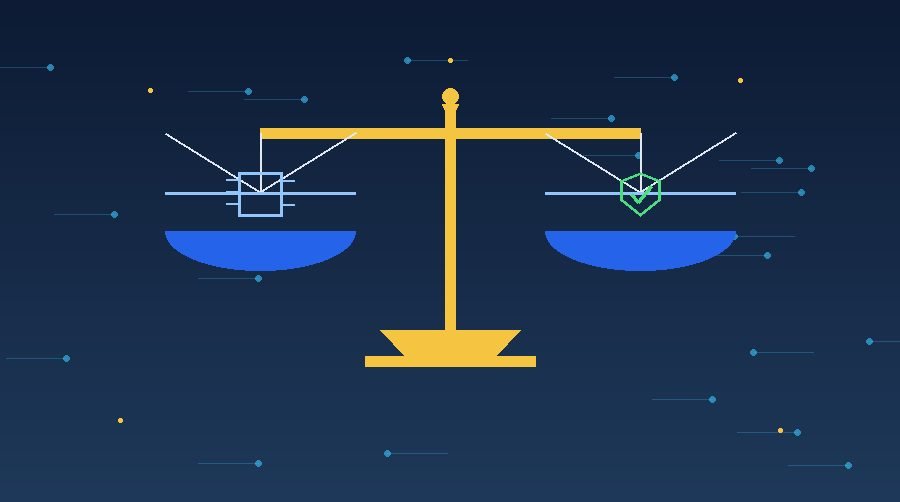
What are the ethical considerations in AI development?
Ethical considerations in ai development are the questions builders must answer before an AI system reaches real people: is it fair, does it protect privacy, can its decisions be explained, who is responsible when it goes wrong, and what happens to jobs? In short, ethical AI development means building systems that are fair, transparent, accountable, safe, and respectful of privacy, and testing those promises instead of assuming they hold. It matters because AI now helps decide who gets hired, who gets a loan, and what your phone camera does with your face, so one careless design choice can harm thousands of people at once.
Why does bias happen in AI systems?
Bias is the most talked-about ethical problem in AI. An AI system has no prejudices of its own. It learns from data, and when that data reflects the inequalities of the real world, the system copies them and can even make them worse. A hiring tool trained on ten years of a company’s past hires learns to prefer the kind of candidate the company hired most often. That is what happened with a resume-screening tool Amazon built and later abandoned, widely reported to have downgraded resumes containing the word “women’s” because the hiring data it learned from was mostly male.
Bias can also come from the labels humans attach to data, or from testing that only checks average accuracy, which hides the fact that a system fails more often for one group than for another. Developers reduce bias by checking who is represented in the training data, testing accuracy separately for different groups, and re-testing after every update, because a fair model can drift as new data arrives.
How does AI development affect your privacy?
AI systems are hungry for data, and that hunger is a privacy problem. A chatbot, a photo enhancer, or a voice assistant can only work well if trained on enormous amounts of information, some of it personal. Your photos, messages, voice recordings, and location history can all end up as training material if the app’s terms allow it. Did you agree to that, and do you know what happens to your data afterward?
Good practice starts with data minimization: collecting only the data the system genuinely needs and deleting it when it is no longer needed. It continues with clear consent, so the user understands what is collected, and strong security, because a data breach turns a privacy problem into an identity-theft problem. Many modern phones now run some AI features on the device itself, so your photos or voice never leave the phone — one of the most privacy-friendly design choices a developer can make.
What does transparency mean in AI?
Transparency means people can understand, at least in broad terms, how an AI system reached its decision and when AI is being used at all. It does not mean publishing every line of code. It means a loan applicant can be told which factors counted against them, a patient can be told an AI tool helped read their scan, and a reader can be told the summary they just read was written by software.
The opposite is the black box: a system whose outputs nobody inside the company can explain. Black boxes are dangerous in high-stakes decisions, because when something goes wrong, nobody can say why or fix it. Developers can be transparent by publishing model cards, short documents describing what a model was trained on and where it is known to fail, and by labelling AI-generated content. In Europe, the AI Act makes some of this a legal duty: from August 2026, people interacting with chatbots must be told they are dealing with a machine.
Who is accountable when AI makes a mistake?
Accountability is the question that makes AI ethics concrete. If a self-driving car crashes, a hiring tool rejects a qualified candidate, or a medical AI misses a diagnosis, who answers for it? The honest answer is that the AI itself cannot be accountable, because it has no intentions, no assets, and no ability to make amends. Accountability has to sit with people and organizations.
Responsibility should sit across the whole chain: the data team owns data quality, the model team owns testing, and the deploying company owns monitoring it and pulling it back if it misbehaves. A serious AI team names a person who owns each system’s risks, keeps records of design decisions and test results, and has a clear process for complaints. Without those records, accountability is just a slogan.
Will AI take jobs, and what should developers do about it?
AI will change jobs, and pretending otherwise helps nobody. Some tasks will be automated, some roles will shrink, and new roles will appear. The ethical issue is not whether change happens, but how it is handled: who bears the cost, who benefits, and whether the people affected have a say and a path forward.
Developers should think about this before deployment, not after the layoffs, for example by designing AI to assist workers rather than replace them, like a tool that drafts a report a human still reviews. UNESCO’s Recommendation on the Ethics of AI, adopted in 2021, asks member states to assess the impact of AI on jobs and protect workers at risk. For a wider look at these dilemmas, MakeUseOf’s plain-English guide to AI ethics covers the same questions from a reader’s point of view.
How do developers keep AI safe?
Safety means testing a system against misuse, unexpected inputs, and the ways real people actually behave, not just the ways designers hoped they would. A chatbot tricked into giving dangerous instructions is unsafe. A photo app used to create realistic fake images of real people is unsafe. A recommendation system that pushes vulnerable teenagers toward harmful content is unsafe.
Responsible teams test before release and keep testing afterward, run red-team exercises where specialists try to break the system, set limits on what it is allowed to do, and build in human oversight for the decisions that matter most. A system should fail safely, with a clear error and a human in the loop, rather than failing silently with a confident wrong answer.
Deepfakes are a growing misuse: convincing fake images, audio, and video of real people make non-consensual imagery and fraud far easier. The EU AI Act adds prohibitions on AI systems that generate non-consensual intimate imagery, from December 2026. In the United States, the TAKE IT DOWN Act, signed in May 2025, requires platforms to remove such images on request.
Which ethical framework should teams follow?
There is no single rulebook for AI ethics, but three frameworks dominate the conversation: UNESCO’s Recommendation sets the global values, the EU AI Act sets binding legal duties for anyone selling AI in Europe, and NIST’s AI Risk Management Framework gives US teams a practical, voluntary method for risk.
| Framework | What it is | Who it applies to | Main strength |
|---|---|---|---|
| UNESCO Recommendation on the Ethics of AI (2021) | A global standard adopted by 193 member states, built on human rights | Governments and organizations worldwide | Broad values and policy guidance, including opposition to social scoring |
| EU AI Act (Regulation (EU) 2024/1689) | The world’s first comprehensive AI law, sorting systems by risk | Anyone placing AI on the EU market, including US companies | Legally binding duties, with bans on the riskiest uses and chatbot transparency rules |
| NIST AI Risk Management Framework 1.0 (2023) | Voluntary US guidance around four functions: Govern, Map, Measure, Manage | Any organization building or using AI, of any size | Practical and flexible: a step-by-step method for managing risks |
For a team, the NIST framework is the best starting point; for a company selling into Europe, the EU AI Act is not optional.
What rules already apply to AI in the US and Europe?
As of late 2026, the United States still has no single comprehensive federal AI law. Instead, AI is governed by a patchwork of existing laws, such as anti-discrimination law in hiring and lending, consumer protection law enforced by the Federal Trade Commission, and sector rules in health care and finance. The FTC has warned there is no “AI exemption” from existing law, and has acted against companies that made misleading claims about what their AI could do.
States have moved faster than Congress. Colorado passed the first comprehensive state AI law in 2024, aimed at high-risk systems making consequential decisions about jobs, housing, credit, education, and health care, but it was repealed and replaced in May 2026 with a narrower framework before it ever took effect. California and Texas have both enacted AI laws effective in 2026.
Europe is further ahead. The EU AI Act entered into force on 1 August 2024 and applies in phases: bans on unacceptable-risk uses, such as social scoring and manipulative AI, since 2 February 2025; general-purpose AI model rules since 2 August 2025; and most remaining rules, including chatbot transparency duties, since 2 August 2026. High-risk duties were delayed by the 2026 Digital Omnibus and now apply on 2 December 2027 for most high-risk systems and 2 August 2028 for AI embedded in regulated products. US companies selling apps or services in Europe are covered whether or not they are based there.
What does ethical AI look like on your phone?
Most people meet AI through their phone, where the ethical issues become concrete. A photo enhancer that quietly uploads your pictures for training is a privacy issue. A keyboard that learns from everything you type is a consent issue. A face filter that only works well on light skin is a bias issue. An app that clones your voice from a short recording is a safety issue.
There are positive examples too. On-device AI, where processing happens on your phone instead of a distant server, keeps your data in your hands and is becoming common in photo editing and voice features. Apps that explain in one tap what data they collect are practicing transparency, and tools that let you delete your data are practicing respect for the user.
Before installing an AI app, check three things: does its store page explain data collection in plain words, does it work offline or on-device, and is there a named company and a way to contact a human? Accountability starts with knowing who is responsible. Our guide to the best AI paraphrasing tools shows how these questions apply to one popular AI app category, and our review of the Remini AI photo enhancer app looks at the same trade-offs for a photo tool.
How can you spot ethical AI as a user?
You do not need to read a company’s ethics policy to judge its AI. It should tell you when you are talking to a machine, explain the decisions that affect you in plain words, give you a way to appeal or talk to a human, and let you see and delete your data. When a tool fails one of those checks, report it through the app, because user reports are how biased or unsafe behavior gets discovered. If it affects a decision about a job, a loan, or housing, ask for a human review and keep a record. Our plain-English guide to tech terms explains the jargon AI companies use.
Frequently asked questions
What are the main ethical issues in AI development?
The main issues are bias and fairness, privacy, transparency, accountability, safety and misuse, the impact on jobs, and the environmental cost of training large models. They overlap: a system that is not transparent is hard to hold accountable, and a system trained on biased data will not be fair.
What is an example of unethical AI?
A widely reported example is a hiring tool that downgraded resumes containing the word “women’s” because it had learned from historical hiring data that was mostly male. Other examples include facial recognition that performs worse on darker skin and chatbots that generate realistic fake images of real people without consent.
Is there a law that regulates AI ethics?
There is no single global AI ethics law, but binding rules exist. The EU AI Act is the most comprehensive, with bans on the riskiest uses in force since February 2025 and most remaining rules applying since August 2026. The United States has no comprehensive federal AI law, but existing anti-discrimination and consumer protection laws apply, and several states, including California and Texas, have enacted AI laws effective in 2026.
How can developers make AI more ethical?
Developers can test training data for bias and accuracy separately for different groups, collect only the data they need and protect it, document what their models can and cannot do, label AI-generated content, keep humans in charge of high-stakes decisions, and follow the NIST AI Risk Management Framework.
Can AI be completely unbiased?
No. AI learns from data produced by an imperfect world, so some bias will always be present. Developers can measure bias, reduce it where it causes harm, monitor it continuously, and give affected people a way to challenge decisions. A system honest about its limits is more ethical than one that claims to be neutral.