
What Are the Most Important Wearable Technology Innovations in 2026?
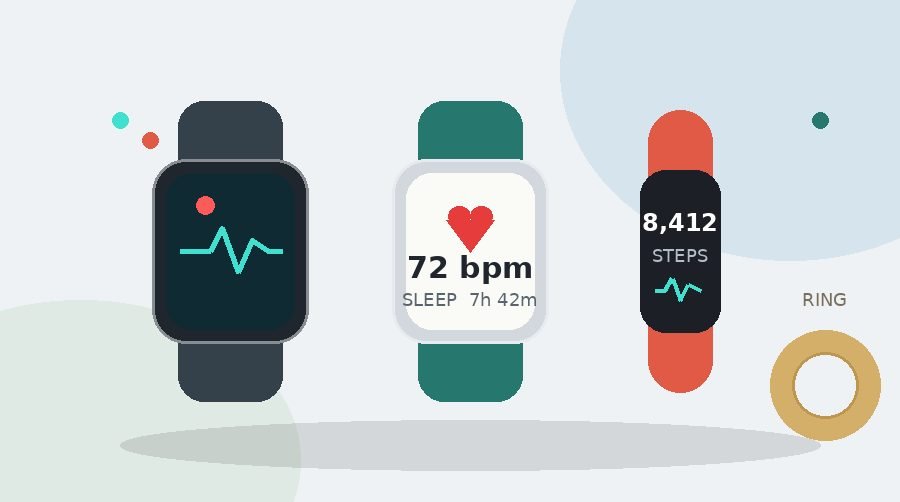
Wearable technology innovations in 2026 have turned the smartwatch from a step counter into a small health companion that tracks your heart, sleep, stress, and movement around the clock. It then turns those signals into plain guidance about rest, training, and daily habits. The biggest change is the combination of better optical sensors, longer battery life, smarter software, and AI coaching that reads patterns over weeks. A modern watch can take an ECG-style reading, warn you about an irregular heart rhythm, flag possible signs of sleep apnea, estimate blood oxygen, and detect a hard fall. A smart ring can do much of the same sleep and recovery tracking without a screen or a nightly charge. None of these devices diagnose disease, and none replace a doctor. They estimate, they notice trends, and they nudge you to act sooner.
What Can a Wearable Actually Do Now?
A good 2026 wearable does the basics far better than the trackers of five years ago. Optical heart-rate sensing now samples far more often, including while you sleep, so resting heart rate and heart-rate variability have become useful trend lines. GPS is more accurate on runs and rides, automatic workout detection is quicker, and water resistance is now standard on most serious watches. Sleep tracking has moved from bedtime totals to sleep stages, overnight temperature, breathing rate, and a morning sleep score. Contactless payments, music control, notifications, and voice assistants are now table stakes, and the best watches add cellular and satellite connectivity so you can call and share your location even when your phone is at home.
Which Health Sensors Matter Most?
Heart-rate sensing is the foundation of almost everything a wearable reports, because heart rate, resting heart rate, and heart-rate variability feed into fitness, sleep, stress, and recovery scores. A single-lead ECG app, available on Apple Watch Series 4 and later except for the SE models, can generate a reading similar to a single-lead electrocardiogram and is intended for people aged 22 and older. It can flag an irregular rhythm that may suggest atrial fibrillation, but it cannot diagnose it, and a normal reading does not rule out a heart problem. Sleep apnea notifications, offered by Apple on Series 9 and later for adults without a diagnosis, detect signs over time, not in one night.
How Is AI Changing Wearables in 2026?
Artificial intelligence is the second big shift in wearable technology innovations, and it is easier to overstate than the sensors themselves. The real change is that watches and rings now turn raw data into coaching. Samsung’s Galaxy Watch 9 offers an Energy Score, sleep coaching, bedtime guidance, a running coach with personalized training plans, and a vascular load metric that tracks heart-related stress trends overnight. Apple pairs its newest watch with a redesigned Health app that uses Apple Intelligence to turn health and fitness data into proactive insights, plus a Workout Buddy feature that offers encouragement during exercise. Garmin offers deep training metrics, training readiness, recovery time, and suggested workouts that adapt to how hard you trained yesterday.
What Are Smart Rings, and Who Are They For?
Smart rings are the most interesting wearable technology innovations for people who do not want another screen. The Oura Ring 4, which starts at $349 in the United States, tracks sleep, readiness, resting heart rate, heart-rate variability, skin temperature, and stress with no display, no vibration, and no notifications to interrupt your day. Its battery lasts up to eight days, and the all-titanium build is light enough to forget you are wearing it. The catch is the membership, which costs $5.99 per month or $69.99 per year after the first month, and which unlocks most of the detailed scores and trends.
How Do the Major 2026 Wearables Compare?
The 2026 wearable market has a clear shape once you sort it by phone, budget, and goal. Apple leads for iPhone owners, Samsung leads for Galaxy phone owners, Garmin leads for serious training and multi-day battery life, Google and Fitbit lead for simple everyday tracking at a lower price, and Oura leads for screen-free sleep and recovery. The table below compares the leading devices on starting price, battery life, headline health features, and best fit, using starting list prices checked in October 2026. Sale prices change often, so treat these figures as a starting point and check the official store before you buy.
| Device | Starting US price | Battery life | Headline health features | Best for |
|---|---|---|---|---|
| Apple Watch Series 12 | From $399 | Up to 24 hours | ECG, hypertension and sleep apnea notifications, sleep score, blood oxygen | iPhone owners who want the deepest health and safety features |
| Apple Watch SE 3 | From $249 | Up to 18 hours | Sleep score, sleep apnea notifications, heart-rate alerts, fall detection | First-time Apple Watch buyers on a budget |
| Samsung Galaxy Watch 9 | From $379.99 | Up to 40 hours | Energy Score, sleep apnea detection, vascular load, ECG, Gemini | Galaxy owners who want AI coaching |
| Garmin Venu 4 | From $549.99 | Up to 10 days | ECG, Pulse Ox, sleep coaching, training readiness, flashlight | Training, outdoor use, multi-day battery |
| Google Pixel Watch 4 | From $349.99 | Up to 30 hours | ECG, blood oxygen, sleep tracking, Fitbit coaching | Pixel and Android owners |
| Fitbit Charge 6 | From $159.95 | Up to 7 days | Heart rate, blood oxygen, ECG, GPS, Daily Readiness | Simple, slim, low-cost tracking |
| Oura Ring 4 | From $349, plus $5.99 per month | Up to 8 days | Sleep, readiness, heart-rate variability, temperature, stress | Screen-free sleep and recovery |
Two patterns stand out. First, the starting price tells only part of the story, because subscriptions change the true cost. Apple Fitness+ costs $9.99 per month, Fitbit Premium costs $9.99 per month or $99.99 per year, Garmin Connect+ costs $6.99 per month or $69.99 per year, and Oura membership costs $5.99 per month or $69.99 per year. Core tracking works without those subscriptions on most watches, yet many of the insights that make a wearable feel smart sit behind the paywall, so add at least a year of the relevant subscription to the price before you compare two devices.
How Should You Choose a Wearable in 2026?
Start with your phone, then your goal, then your budget, in that order. If you own an iPhone and want the deepest health features, an Apple Watch is the natural choice, with the SE 3 from $249 for most people and the Series 12 from $399 for the full sensor set. If you own a Samsung Galaxy phone and want AI coaching and Gemini on your wrist, the Galaxy Watch 9 from $379.99 is the natural choice, with the older Galaxy Watch 8 often discounted now that its successor has arrived. If you train seriously and want training metrics and a battery that lasts a week or more, a Garmin is the natural choice, and our guide to the best Garmin smartwatches for women and men can help you narrow the range.
What Is Hype, and What Is Real?
Blood glucose tracking is the clearest example of hype outrunning reality in 2026. Several companies sell smartwatches and smart rings that claim to measure or estimate blood glucose without a needle, yet the Food and Drug Administration has said it has not authorized, cleared, or approved any smartwatch or smart ring that is intended to measure or estimate blood glucose values on its own, and in February 2024 it warned people with diabetes not to use such devices to manage their condition. A proper glucose monitor or continuous glucose monitor, evaluated by the Food and Drug Administration for safety and effectiveness, is the only safe choice for diabetes care. Blood pressure is the next claim to treat with care.
How Private Is Your Wearable Data?
Privacy is the part of wearable technology innovations that buyers think about last and regret most. A wearable collects some of the most personal data you own, including your heart rate, sleep, location, menstrual cycle, and daily routine, and that data lives in a company cloud, not only on your wrist. Before you buy, read the privacy policy, and check what the company collects, how long it keeps it, whether it sells or shares it, and whether you can delete it. Health data is a target for advertisers, insurers, and data brokers, and the rules that protect it vary by state in the United States, so the safest choice is a company with a clear privacy record and a simple delete option.
Where Do Wearables Go Next?
The next wave of wearable technology innovations is already visible in research labs, even if it is not ready for your wrist. Continuous glucose monitoring is expanding beyond diabetes care into broader wellness use, with sensor patches that sit on the skin for days and report glucose patterns in real time. Smart glasses are adding AI, cameras, and audio so you can ask a question, translate a sign, or get directions without looking at a phone.
For a deeper look at turning wearable data into a daily plan, our guide to the Google Fit app explains how to use the data from any Android wearable, and if sleep is your main goal, our guide to the best sleep earbuds can help you block noise and fall asleep faster, which matters more for recovery than any sleep score. Apple publishes its own clear summary of what Apple Watch can and cannot do for your health, and it is worth reading before you buy any watch, from any brand. Start with your phone, your goal, and your budget, wear the device every day for a week, and let the trends, not a single reading, guide your next step.
Frequently Asked Questions
Can a smartwatch diagnose a heart problem?
No, a smartwatch cannot diagnose a heart problem. It can take an ECG-style reading, warn you about an irregular rhythm, and show trends in your heart rate, yet only a doctor with a proper ECG, blood tests, and a full history can diagnose a heart condition. If your watch flags an irregular rhythm more than once, or if you have chest pain, shortness of breath, dizziness, or fainting, seek medical care promptly and share the watch readings with the clinician.
Do I need a subscription to use a smartwatch or smart ring?
No, you do not need a subscription for basic tracking on most watches, because steps, heart rate, sleep, and workouts work without one. You may need one for deeper insights, including detailed readiness scores, advanced sleep analysis, and personalized coaching. Oura membership costs $5.99 per month or $69.99 per year, Fitbit Premium costs $9.99 per month or $99.99 per year, Garmin Connect+ costs $6.99 per month or $69.99 per year, and Apple Fitness+ costs $9.99 per month.
Which wearable has the longest battery life?
Garmin watches have the longest battery life among mainstream smartwatches, with the Venu 4 lasting up to 10 days, and some Garmin models lasting two weeks or more. Fitbit Charge 6 lasts up to 7 days, and Oura Ring 4 lasts up to 8 days. Apple Watch Series 12 lasts up to 24 hours, Galaxy Watch 9 lasts up to 40 hours, and Pixel Watch 4 lasts up to 30 hours. Real battery life is shorter with GPS, cellular, and the always-on display, so treat the manufacturer’s figure as a best case.
Are smart rings better than smartwatches for sleep tracking?
Smart rings are often better for sleep tracking in practice, because they are lighter, more comfortable to wear overnight, and less likely to disturb your sleep with a screen or a buzz. The Oura Ring 4 tracks sleep stages, readiness, resting heart rate, heart-rate variability, and skin temperature for up to eight days without charging, and many users wear it every night without thinking about it. A smartwatch can track sleep well too, yet it needs charging more often, and a watch that dies overnight tracks nothing.
Should I buy the newest model or the older one at a discount?
Buy the newest model when the price gap is small and you want the latest sensors, the longest software support, and the newest safety features. Buy the older model when the discount is large and the older device still has the features you need, because last year’s watch is often a better value than this year’s watch at full price. Check that the older model still receives updates and that its health features match your goal, especially if you want sleep apnea notifications, hypertension notifications, or an ECG.