
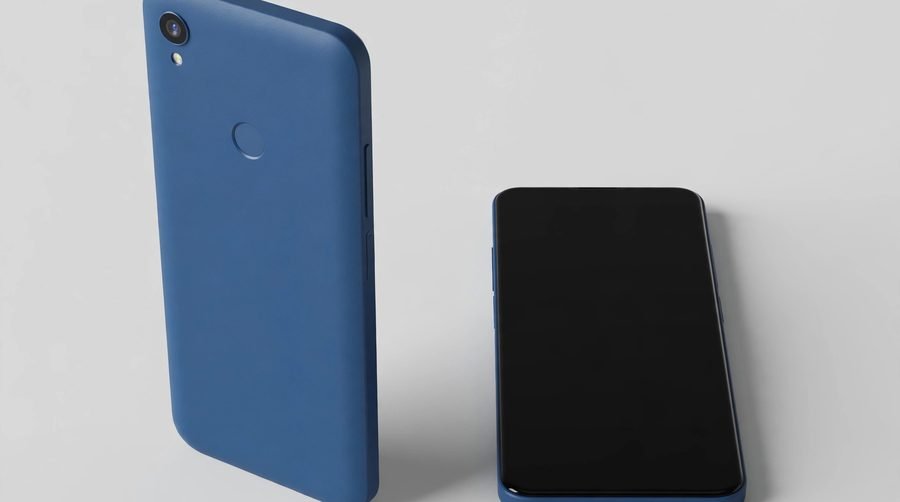
Is the Nokia C3 still a good phone to buy in 2026?
No. The Nokia C3 was a decent budget phone when it launched in August 2020, but in 2026 it is discontinued, stuck on Android 10, and no longer receiving security updates. It still works for the simplest jobs — calls, texts, light browsing and music — yet it is too slow, too limited and too outdated to recommend as a main phone today. It only makes sense as a very cheap spare or a first phone for a child, and only if you pay almost nothing for it.
The Nokia C3 came from HMD Global, the company that made Nokia-branded phones, and it sat at the very bottom of the Nokia range. It was built for buyers who wanted a big screen, a clean version of Android and the Nokia name for as little money as possible. At launch it cost about $100: HMD Global announced a global average price of 85 EUR, and launch coverage priced it at $100. GSMArena, however, lists its price as about 130 EUR, so launch prices clearly varied by market and by source. What nobody disputes is that this was one of the cheapest ways to get a large-screen Android phone in 2020.
For US readers, one honest note: HMD Global never announced a US launch for the Nokia C3. It went on sale in Europe and other select markets from September 2020, and in the US it has only ever appeared as an imported unlocked unit — there was no US carrier or retail launch, no US warranty, and its LTE bands were set for other markets. If you find one in the US, treat it as an import.
Before going further, one confusion is worth clearing up. There are two very different phones called Nokia C3. The Nokia C3-00 from 2010 was a small feature phone with a physical QWERTY keyboard, while the Nokia C3 from 2020 is a full touchscreen Android smartphone. This post is about the 2020 Android phone only. If a seller offers you a Nokia C3 with a keyboard, that is the 2010 model, not the phone described here, and it cannot run modern apps at all.
What are the Nokia C3 specifications?
The table below lists the full Nokia C3 specifications as published by GSMArena, with charging and storage-expansion details from other spec sources where GSMArena does not list them. Nothing here is guessed: every figure comes from a published specification page checked on 24 November 2026.
| Feature | Nokia C3 specification |
|---|---|
| Announced / released | Announced 4 August 2020; released 13 August 2020 |
| Status | Discontinued |
| Display | 5.99-inch IPS LCD, 720 x 1440 pixels (HD+), 18:9, about 269 ppi |
| Chipset | Unisoc SC9863A (28 nm) |
| Processor | Octa-core (4 x 1.6 GHz Cortex-A55 and 4 x 1.2 GHz Cortex-A55) |
| Graphics | IMG8322 |
| RAM | 2GB or 3GB |
| Storage | 16GB or 32GB (eMMC 5.1), microSDXC dedicated slot up to 128GB |
| Rear camera | 8 MP, f/2.0, autofocus, LED flash, HDR, 1080p video at 30fps |
| Front camera | 5 MP, f/2.4, 720p video at 30fps |
| Battery | 3,040 mAh, removable Li-Ion, 5W charging |
| Operating system | Android 10 |
| SIM | Dual Nano-SIM |
| Security | Rear-mounted fingerprint sensor |
| Connectivity | 4G LTE, Wi-Fi 802.11 b/g/n, Bluetooth 4.2, GPS, FM radio, microUSB 2.0, 3.5mm headphone jack |
| NFC | No |
| Dimensions and weight | 159.9 x 77 x 8.7 mm; 184.5 g |
| Build | Glass front, plastic back and plastic frame |
| Colours | Nordic Blue and Sand Gold |
| Extras | Dedicated Google Assistant button, loudspeaker, accelerometer, proximity sensor |
Two small conflicts in the sources are worth knowing about. First, some specification sites list the phone as running Android 10 (Go edition), while launch coverage from Android Police and XDA-Developers says it shipped with full Android 10, after its predecessors used the lighter Go edition. Second, most sources list the rear camera aperture as f/2.0, but at least one lists f/2.2. Neither difference changes what the phone can do, but they show why you should check a used handset in person rather than trusting a single listing.
How good is the Nokia C3 display for everyday use?
The Nokia C3 has a 5.99-inch IPS LCD display with a resolution of 720 x 1440 pixels, which works out to about 269 pixels per inch. That was a large screen for such a cheap phone in 2020, and the size is still its best feature today. Reading articles, watching YouTube and following maps all feel comfortable because there is simply a lot of screen to look at, and the tall 18:9 shape suits scrolling through feeds and messages.
The picture quality itself is only average. HD+ resolution is noticeably softer than the Full HD screens found on slightly more expensive phones, and text can look a little fuzzy if you hold the phone close to your eyes. Colours are natural rather than vivid, brightness is fine indoors but the screen can be hard to read in strong sunlight, and there is no high refresh rate, so scrolling is not as smooth as on a modern phone. There is also no notch or punch hole: the screen sits between plain top and bottom bezels, which looks dated now but does mean nothing is cut out of videos.
For an older relative or a young child who mainly needs big, readable text, the display still does its job. For anyone who watches a lot of video or reads for hours, the low resolution and modest brightness will start to feel tiring, and that is one of the first reasons to look at a newer budget phone instead.
How does the Nokia C3 perform in daily use?
The Nokia C3 runs on the Unisoc SC9863A chipset, an octa-core chip built on a 28 nm process, paired with either 2GB or 3GB of RAM and 16GB or 32GB of storage. In 2020 this was acceptable for a phone at this price. In 2026 it is slow. Basic tasks such as calling, texting, checking email and playing stored music still work, but opening modern apps takes a visible wait, switching between apps often forces them to reload, and heavy apps such as maps with live traffic or social apps full of video can stutter.
Storage is the bigger everyday problem. The 16GB model leaves very little room once Android and a few apps are installed, and even the 32GB model fills up fast with photos and app updates. The dedicated microSDXC slot helps, because you can add a card of up to 128GB without giving up your second SIM, but apps themselves cannot all move to the card, so the small internal storage still limits you. If you are choosing between two used Nokia C3 handsets, the 3GB RAM and 32GB storage version is the only one worth considering, and even that is the minimum for Android in 2026.
Gaming is not this phone’s strength. Simple puzzle games and older titles run well enough, but anything demanding will run slowly or overheat the modest chipset. The clean, near-stock Android software helps, because there is little extra software slowing things down, and the rear fingerprint sensor and dedicated Google Assistant button are genuinely useful touches at this price. They do not, however, make up for six years of progress in chip speed.
How good is the Nokia C3 camera?
The Nokia C3 has a single 8 MP rear camera with autofocus, an LED flash and HDR, recording video at 1080p and 30 frames per second. The front camera is a 5 MP unit that records 720p video. There is no second rear camera, no wide-angle lens, no portrait mode worth relying on and no night mode.
In bright daylight, the rear camera takes usable photos for social media and for remembering things: documents, whiteboards, price tags and family snapshots all come out clear enough. Colours are realistic rather than punchy, and detail is modest because 8 MP does not leave much room for cropping. As soon as the light drops, quality falls quickly. Indoor and evening photos look noisy and soft, the flash is harsh, and moving subjects blur easily. Video is steady enough for a short clip in good light, but it lacks stabilisation and looks rough in the dark.
The 5 MP front camera is fine for a video call in a well-lit room, which is what most people will use it for, but selfies are soft and low on detail by modern standards. If the camera matters to you at all, this is a weak point. Even the cheapest new phones in 2026 take clearly better photos in low light, and they do it with more than one lens.
How long does the Nokia C3 battery last?
The Nokia C3 has a 3,040 mAh battery, which is small by 2026 standards, when many budget phones carry 5,000 mAh or more. The modest screen and the low-power chipset help it stretch further than the number suggests, so a light user can still get through a full day on a charge: calls, messages, a little browsing and some music are all manageable. A heavy user who streams video, uses maps and keeps the screen bright will need a top-up before the evening.
Two features stand out here. The first is that the battery is removable, which is rare today. If the battery is worn out, you can swap it instead of paying for a repair, and carrying a charged spare was once a genuine advantage of this phone. The second is the downside: charging is slow. The phone supports only 5W charging over its old microUSB port, so a full charge from empty takes well over two hours, and you cannot use a modern USB-C fast charger with it.
Age makes this worse. A used Nokia C3 in 2026 has a battery that is at least a few years old, and a lithium battery loses capacity over time. If the seller cannot show that the battery was replaced recently, expect noticeably shorter life than the phone had when it was new, and factor in the cost and trouble of finding a genuine replacement battery for a discontinued model.
Which Android version does the Nokia C3 run, and does it still get updates?
The Nokia C3 launched with Android 10 and, as far as any verified record shows, it stayed on Android 10. Early reports suggested it might receive Android 11, and HMD Global’s update timeline at the time listed newer Nokia phones ahead of it, but no confirmed Android 11 rollout for the C3 has been found. The latest firmware build recorded for the phone is an Android 10 build from May 2023, which points to security maintenance rather than a version upgrade.
Security support has also ended. Independent end-of-life trackers based on official data put the end of security updates in November 2022, after about two years of patches, and HMD Global later confirmed that C-series phones were not promised operating system upgrades at all. That means every security hole discovered since late 2022 has stayed open on this phone. It will still switch on and run its old apps, but it should not be trusted with banking, work email, passwords or anything else sensitive.
This is the single most important fact about the Nokia C3 in 2026. A phone without security updates is not just an old phone; it is a phone that cannot protect you. If you do use one, keep it off important accounts, avoid installing apps from outside the Play Store, and treat it as a spare or a media player rather than a daily driver.
Is the Nokia C3 still worth buying in 2026?
For almost everyone, the answer is no. The Nokia C3 is discontinued, so you cannot buy it new from Nokia or HMD. Any unit you find today is used, refurbished or old stock, and it will be six years old or close to it. It runs an Android version from 2019, it has not received a security patch since 2022, its 2GB or 3GB of RAM struggles with modern apps, and its 3,040 mAh battery charges slowly and is likely worn.
There are only two situations where it still makes sense. The first is as a spare phone kept for calls, texts, an alarm clock, music or a camera when your main phone is being repaired. The second is as a deliberately simple first phone for a child, with no banking apps, no work accounts and strict limits on what is installed. In both cases the price has to be very low, because the phone’s useful life is already short.
What is a fair price? No current, verified US used price could be confirmed for this post — the phone was never sold in the US, and US second-hand listings are scarce and mostly the wrong phone (the 2010 C3-00). The only listing found was an eBay Australia sale of a 2GB/16GB model at AU$20 (about $13), and that page was last crawled about ten months ago, so it is a rough guide rather than a live price. At launch in 2020 it cost about $100. As a rule, do not pay more than the price of a basic new feature phone or a few weeks of mobile data for a used C3, and walk away if the seller asks for anything close to the price of a new budget smartphone.
If you do buy one, check four things before paying: that the battery still holds a charge, that the screen has no dead spots, that the rear fingerprint sensor works, and that the phone is factory reset and not locked to an account. Any of those problems turns a cheap spare into a waste of money.
What should you buy instead of the Nokia C3?
If you liked the Nokia C3 for its big screen and low price, a newer budget phone is a better use of the same money. Look for a phone from 2024 or later with at least 4GB of RAM, 128GB of storage, a 5,000 mAh battery and a promise of security updates. Those four numbers together solve almost every weakness of the C3: apps stay open, storage stops filling up, the battery lasts a full day, and the phone stays protected.
A practical example is the Vivo Y30, which offers a larger battery, more storage and a newer Android experience than the ageing Nokia C3, while still sitting in budget territory. It is not the only option, but it shows what your money buys when you move even a few years forward: a phone you can actually rely on every day, rather than one you have to work around.
Staying inside the Nokia family does not solve the problem either. The direct successor, the Nokia C30 (released July 2021), keeps the same Unisoc SC9863A chipset but adds a larger 6.82-inch display, a 13 MP rear camera and a much bigger 6,000 mAh battery with 10W charging, running Android 11 Go edition. The battery and screen are real upgrades, yet the speed is unchanged and it is itself a 2021 phone, so it is a better spare than the C3, not a long-term daily phone.
If you are thinking of leaving Android altogether, an older iPhone is another route, and it can be a sensible one because iPhones receive updates for far longer than budget Android phones. If you go that way, read how to get iOS 26 on your iPhone first, so you know whether the model you are considering can run the latest software. The cheapest iPhone that still gets updates is a far safer daily phone than the best-preserved Nokia C3.
Finally, if you already own a Nokia C3, you do not need to throw it away. Wipe it, remove your accounts, and keep it as a backup, a music player, a camera for the garden, or a phone for travel where losing it would not matter. Just do not let it hold your bank app or your main email account any longer.
Nokia C3: Frequently Asked Questions
When was the Nokia C3 released?
The Nokia C3 was announced on 4 August 2020 and released on 13 August 2020. It was made by HMD Global under the Nokia brand and is now discontinued, so it is only available second-hand.
Does the Nokia C3 have a fingerprint sensor?
Yes. The Nokia C3 has a rear-mounted fingerprint sensor in the middle of the back panel, below the single camera. It also has a dedicated Google Assistant button on the side.
Does the Nokia C3 support 5G?
No. The Nokia C3 supports 4G LTE, 3G and 2G only. Its LTE is Category 4, with download speeds of up to 150 Mbps, and it has no 5G modem and no NFC for contactless payments.
Can the Nokia C3 battery be removed?
Yes. The Nokia C3 has a removable 3,040 mAh Li-Ion battery, which is unusual for a modern smartphone. That makes a worn battery easy to replace, although finding a genuine new battery for a discontinued phone can be difficult.
Is the Nokia C3 good for WhatsApp and YouTube?
It still runs WhatsApp and YouTube for now, and its large 5.99-inch screen suits video watching. But with only 2GB or 3GB of RAM and Android 10 with no security updates, apps can run slowly and may stop being supported, so it is not a reliable long-term choice for either app.
Sources checked 24 November 2026: GSMArena Nokia C3 specifications (GSMArena), Android Police launch report, XDA-Developers launch report, Business Standard India launch report, HMD Global launch announcement (global average price 85 EUR, select markets, no US launch announced), and end-of-life trackers for security support dates. Launch price and Android Go edition details differ between sources, as noted in the post.